
France, the cradle of libertinism, has forged a unique culture blending philosophy and sensual pleasures. This tradition has shaped the free morals of society for centuries. Born in Italy in the 16th century, libertinism blossomed in France as early as the 17th century.
The term “libertine” has evolved with social changes. Initially synonymous with religious emancipation, it took on a connotation of moral transgression. This mutation occurred in a context of tensions between mysticism and debauchery.

The 17th century, dubbed the “Century of Saints” and the “Century of Libertines,” embodies this duality. Thinkers like Pierre Gassendi personified “erudite libertinism,” marrying philosophical reflection with a challenge to norms.
This era saw the rise of free thought, rejecting moral and religious conventions. Despite the constraints of royal power, libertinism thrived, profoundly influencing French history and morals.
Key points to remember
- Libertinism was born in Italy in the 16th century and developed in France in the 17th century
- The term “libertine” evolved from a religious meaning to a moral connotation
- The French 17th century experienced a coexistence between mysticism and libertinism
- “Erudite libertinism” combined philosophical reflection and questioning of norms
- Libertine culture profoundly influenced French history and morals
The origins of libertinism in France in the 16th century
French libertinism emerges in the 16th century, a pivotal time. This intellectual movement, inspired by Italy, flourished within the aristocracy. It revolutionized the relationships between men and women.
The Italian influence and Machiavelli
Italian thinkers strongly inspired French libertinism. Machiavelli, Epicurus, and Cardano played a crucial role in this free thought. In 1545, Jean Calvin popularized the term “libertine” in a pamphlet.
The emergence in aristocratic circles
The French aristocracy became the breeding ground for libertinism. Philosophers, mathematicians, and feminists championed this innovative intellectual movement. In 1615, atheist poets formed a cabal, spreading their ideas through anonymous works.
The role of the royal court
The royal court of the Marais played a central role in the rise of libertinism. The kings themselves were often at the heart of moral scandals. Rumors circulated about Henri III's homosexuality and his “mignons.”
Henri IV is famous for his numerous love affairs. His conquests ranged from ladies of the court to peasant women. The libertinism of the 16th century laid the foundations for a movement that would mark the history of French morals.
France and libertinism: historical evolution
The history of French morals reveals a fascinating evolution of libertinism. In the 16th century, this movement was primarily intellectual. The 17th century, despite its reputation as the “century of saints,” saw libertinism flourish even more.
The 18th century marks a crucial turning point. Libertine France flourished, with the movement merging with a more liberated morality. The Regency (1715-1723) witnessed a considerable rise in libertine morals, coinciding with the rise of the Enlightenment.
This era radically transformed matrimonial and social practices. Marriages often became mere financial transactions. Marital separations multiplied within the aristocracy.
- Marriages often became financial arrangements
- Marital separations were common in the upper classes
- Meetings multiplied in salons, at the Opera Ball, and in various entertainment venues
Libertinism transcended social barriers, from the footman to the great lord. It challenged established moral values and revolutionized the sexual practices of the time.
| Period | Characteristics of libertinism |
|---|---|
| 16th century | Mainly intellectual |
| 17th century | Increased development |
| 18th century | Peak, individual freedom |
The golden age of libertinism in the 18th century
The 18th century marks the peak of libertinism in France. This period sees the rise of bold literature and innovative thought. Established social and moral norms are vigorously challenged.
The influence of literary salons
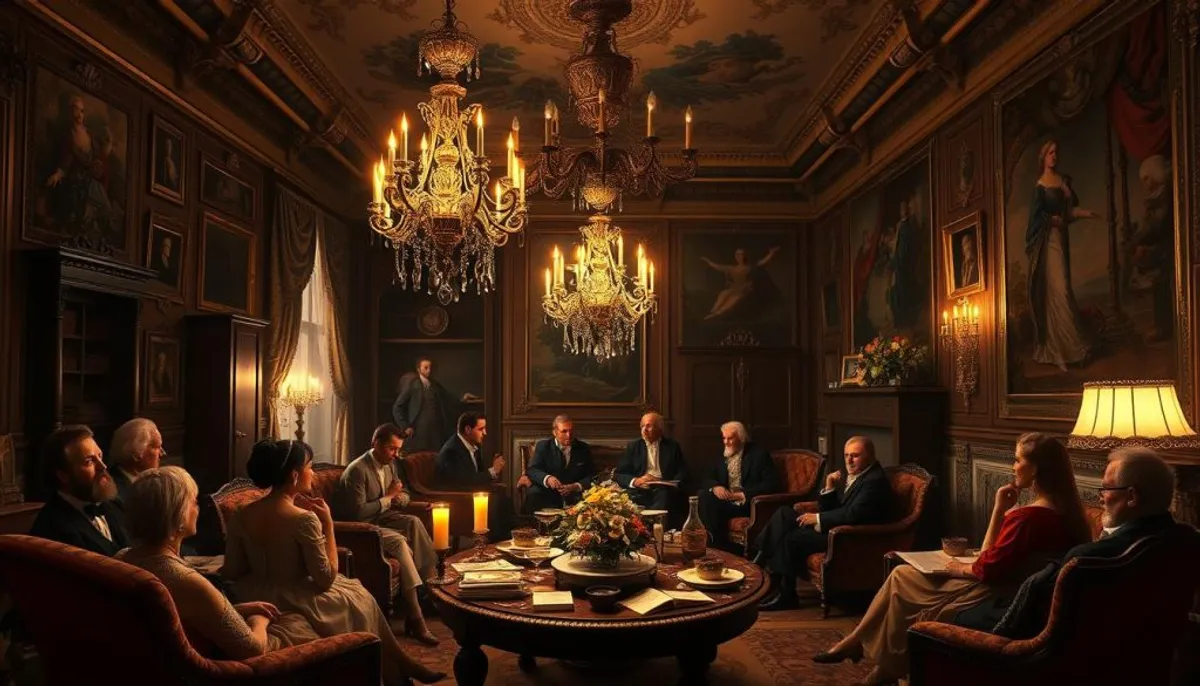
Literary salons propel the dissemination of libertine ideas. These spaces become the theater for lively discussions on philosophy and art. New conceptions of individual freedom and sensuality emerge there.
The development of libertine literature
Libertine literature experiences remarkable growth in the 18th century. Crébillon fils and Choderlos de Laclos produce iconic works like Les Liaisons Dangereuses. These novels explore sensuality and critique social hypocrisy.
The philosophy of the Enlightenment and libertinism
The philosophy of the Enlightenment profoundly influences the libertine movement. Thinkers advocate for freedom of thought and challenge established dogmas. This quest for intellectual autonomy is reflected in libertine literature.
18th-century libertinism asserts itself as a major intellectual movement. It contributes to a deep social and philosophical critique. Its legacy still fuels debates on individual freedom and morals.
The great figures of French libertinism
French libertinism has produced iconic figures who have marked history. These famous libertines embodied freedom and the transgression of social norms. Their influence was particularly felt at the French royal court.
Casanova and his memoirs
Giacomo Casanova, an essential figure of libertinism, left an indelible mark with his memoirs “Histoire de ma vie.” Born in 1725 in Venice, this adventurer embodies the archetype of the libertine seducer.
His writings detail his numerous love conquests and adventures across Europe. They offer a fascinating glimpse into 18th-century society, revealing the morals and intrigues of the time.
The Marquis de Sade and his sultry writings
Donatien Alphonse François de Sade, known as the Marquis de Sade, is another iconic figure of French libertinism. His provocative works, such as “Justine ou les Malheurs de la vertu,” explore the limits of morality and sexuality.
Sade pushes the concept of libertinism to the extreme in his writings. He blends philosophy and eroticism, defying the social and moral conventions of his time.
The libertines of the royal court
The French royal court was a fertile ground for libertinism. Figures like Regent Philippe d’Orléans or Marshal Richelieu were known for their free morals.
These aristocrats lived out their desires without constraint, defying social conventions. Their scandalous behavior fueled gossip and fascinated society of the time.
| Libertine | Period | Notable work |
|---|---|---|
| Casanova | 1725-1798 | Histoire de ma vie |
| Marquis de Sade | 1740-1814 | Justine |
| Crébillon fils | 1707-1777 | Les Égarements du cœur et de l’esprit |
Libertine literature and its characteristics
Libertine novels, a captivating literary genre of 18th-century France, stand out for their boldness and provocation. These clandestine writings employ refined language, filled with innuendos to evade censorship. Their sophisticated style conceals subversive messages behind an apparent lightness.
“Les Liaisons dangereuses” by Laclos and “Les Bijoux indiscrets” by Diderot illustrate this genre. These emblematic works prioritize dialectics and the art of reasoning. They provide a keen analysis of the morals of the time, questioning social conventions.
The epistolary form, favored in erotic literature, multiplies narrative perspectives. It unveils the seducer's strategy and adds a psychological dimension to the intrigues. This narrative technique enriches the complexity of the characters and intensifies the dramatic tension.
| Characteristic | Percentage |
|---|---|
| Libertine works in the 18th century | 20% |
| Representation in prose | 75% |
| Political and social themes | 50% |
Libertine poetry, less widespread, exalts pleasures and freedom of expression. Poets like Théophile and Abbé de Chaulieu enriched this genre. Their works invested various social spaces, from taverns to salons, thus broadening the reach of libertine literature.
The spaces of libertinism: salons and meeting places
Libertinism in France flourished in various fascinating locations. These unique spaces shaped the evolution of morals and propagated libertine ideas. Each has its particular charm and captivating history.
The Parisian salons
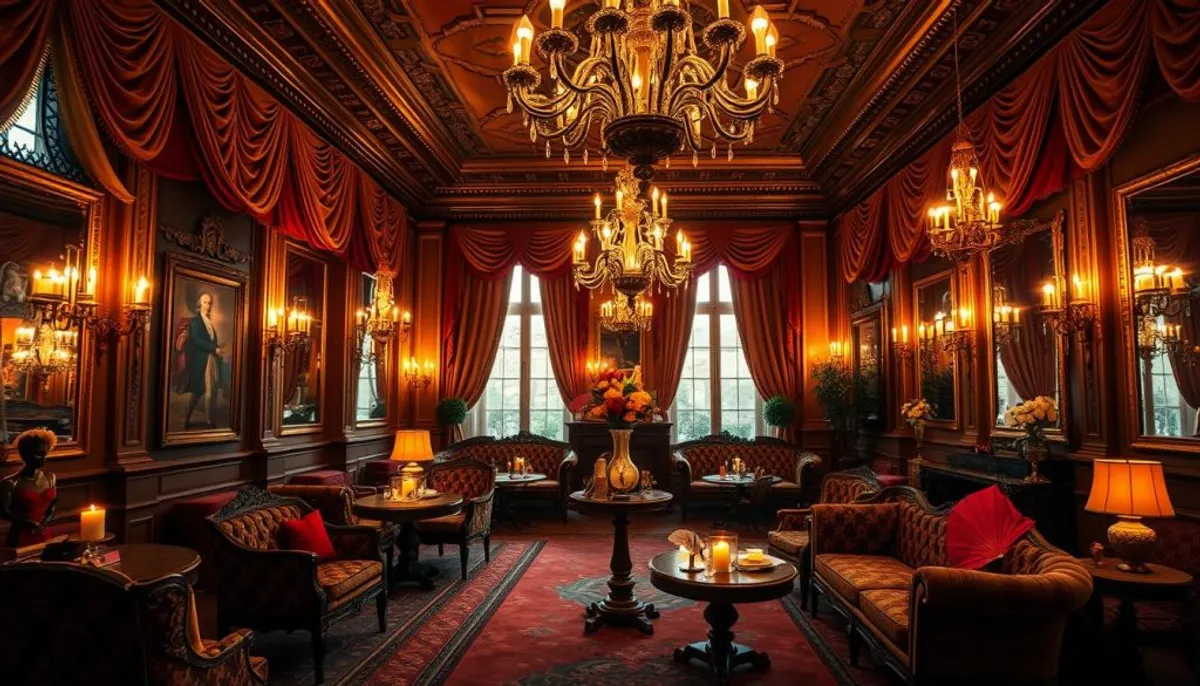
The Parisian salons embodied the essence of intellectual libertinism. They engendered intense philosophical and literary debates. By 1780, their proliferation amplified the influence of libertinism in the French capital.
The royal residences
The royal residences, notably Versailles, were hotbeds of debauchery under Louis XV. Courtiers displayed their love conquests without fear of repercussions. These places embodied the peak of aristocratic libertinism.
The mansions of the Marais
The Marais, a favored district of the aristocracy, was filled with sumptuous mansions. These residences hosted discreet libertine encounters. After the prohibition of prostitution at Versailles, they became refuges for clandestine loves.
Today, France has 264 registered libertine establishments. Cap d’Agde, the European capital of sex, hosts fifty specialized shops and clubs. This evolution illustrates the enduring legacy of French libertinism.
Libertinism and the French monarchy
The French monarchy shaped the evolution of libertinism. The royal courts, true epicenters of libertine behavior, profoundly marked aristocratic society. This influence persisted through successive reigns.
Henri III and his favorites
Henri III, reigning from 1574 to 1589, maintained ambiguous relationships. Surrounded by male favorites known as “mignons,” his reign was marked by rumors about his sexual orientation.
At the same time, he multiplied adventures with young women. This duality illustrated the complexity of morals at the royal court of the time.
Louis XIV and the court of Versailles
Under Louis XIV, libertinism intensified at Versailles. By around 1665, the court of the Sun King attracted many young nobles fond of libertine pleasures.
Prostitution proliferated around the castle. Its extent affected the health of workers, even hindering the construction of the palace.
Louis XV and his royal favorites
Louis XV, reigning from 1710 to 1774, was known for his preference for women. Madame de Pompadour, his favorite, wielded considerable influence over the kingdom's politics.
She founded the Parc-aux-cerfs, a place dedicated to the king's pleasures. With age, Louis XV, fearing venereal diseases, preferred increasingly younger companions.
| King | Reign period | Libertine characteristics |
|---|---|---|
| Henri III | 1574-1589 | Ambiguous relationships, “mignons,” rumors of homosexuality |
| Louis XIV | 1643-1715 | Libertine court at Versailles, widespread prostitution |
| Louis XV | 1715-1774 | Numerous favorites, Parc-aux-cerfs |
The legacy of libertinism in French culture
Libertinism has profoundly marked the cultural legacy of France. Its influence endures in literature, the arts, and gallant morals. The libertine novels of the 18th century, such as those by Laclos and Sade, remain studied and adapted.
Their lasting impact testifies to the importance of libertinism in French culture. This influence has forged the image of France as a land of love and gallantry. This reputation persists worldwide, attracting visitors in search of romance.
The gallant morals remain an essential facet of French cultural identity. Libertinism challenged dogmas and social conventions. This critical thought foreshadowed certain aspects of the French Revolution.
Researchers like Jean-Pierre Cavaillé have explored this cultural legacy. His work “Postures libertines: la culture des esprits forts” (2011) delves into the subject. The legacy of libertinism manifests in contemporary French literature, cinema, and visual arts.
It continues to inspire creators and fuels debates on individual freedom. Discussions on sexuality and social norms bear witness to its lasting influence. Libertinism continues to shape French culture significantly.
Conclusion
The evolution of libertinism in France has profoundly marked the history of morals. From the 16th to the 18th century, this movement transformed from an intellectual current to a sociocultural phenomenon. Its impact has manifested in literature, the arts, and philosophy.
Since the 1970s, studies on 18th-century libertinism have proliferated. They have revealed the complexity of this concept. The term “libertine” has evolved, shifting from free thought to moral dissolution.
The French legacy of libertinism persists. Figures like the Marquis de Sade have influenced modern thought. Libertinism has challenged established dogmas, playing a crucial role in social critique.
Today, its influence endures in French culture. It also shapes the perception of France abroad. Libertinism remains a fascinating subject of study and debate.