
In this article, we will explore how the concept of secure attachment influences the psychological development of children from birth. This fundamental bond is crucial for their emotional safety and future flourishing.
The psychiatrist Donald Winnicott stated in 1958 that “a baby alone does not exist,” thus highlighting the infant's dependence on their surroundings. This idea emphasizes the importance of relationships in building trust and security.
By understanding this bond, we can better grasp how each need, whether physical or emotional, contributes to the formation of a solid foundation for children. This guide will detail the necessary steps to transform your attachment style and create an environment conducive to stable emotional growth.
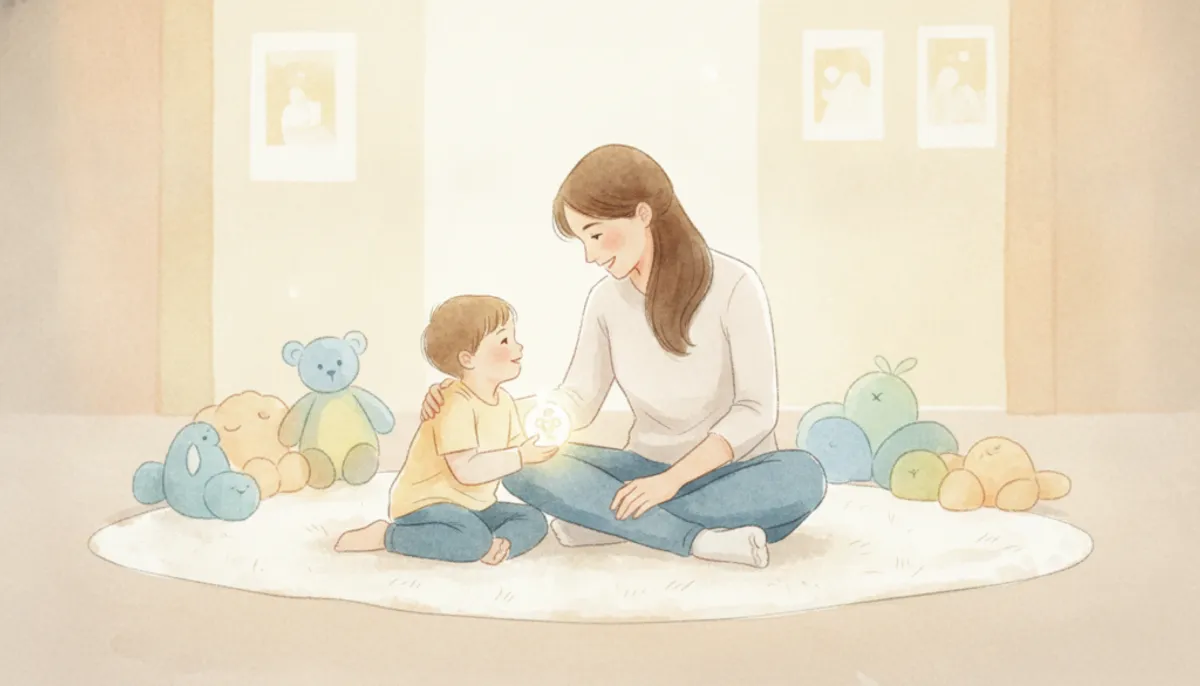
Key Points to Remember
- Psychological development begins at birth.
- The baby’s dependence on adults is essential.
- Emotional safety shapes future relationships.
- Physical and emotional needs are interconnected.
- A supportive environment is crucial for flourishing.
Introduction
Every child forges their identity through the relationships they establish from a young age. The attachment theory, initiated by John Bowlby, highlights how these early social interactions influence the child's inner development. It is essential to understand that our adult relationships often reflect the care received from our parents during our tender childhood.
This article examines how each person can learn to regulate their emotions to build healthier and more lasting connections with others. We will see that emotional security is a fundamental need that influences our ability to explore the world with confidence and serenity.
By exploring these mechanisms, each adult can discover a new way to approach their daily interactions and enhance their overall emotional well-being.

Understanding the Basics of Attachment Theory
Understanding attachment theory is crucial for grasping how children form emotional bonds. This approach, developed by John Bowlby, highlights that each child comes into the world with innate emotional needs.
In 1958, Bowlby asserted that a child is not a “tabula rasa” at birth. This means that early experiences play a fundamental role in shaping their personality.
The research of Karl Lorenz on geese in 1935 also demonstrated that the attachment bond is biologically programmed. This imprint ensures survival by connecting the young to parental figures.

These discoveries emphasize that the security provided by parents is the indispensable foundation for the child's cognitive development. Indeed, every unmet emotional need can undermine self-confidence and emotional management.
By analyzing these early experiences, we better understand how they influence the relationships we maintain with the outside world throughout our lives.
The Different Types of Attachment
Attachment styles play a fundamental role in the emotional life of children. In 1969, Mary Ainsworth highlighted four distinct attachment styles through her experimental protocol known as the Strange Situation. This research allowed for the observation of children's reactions to separation.
A study by C. Hazan and P.R. Shaver in 1987 revealed that 50 to 60% of individuals develop a secure attachment during childhood. In contrast, the disorganized attachment style, observed in 5% of the population, is characterized by unpredictable behaviors towards an attachment figure.
Each style influences how an adult manages their anxiety and fear of abandonment in their relationships. Understanding these attachment typologies allows for the identification of defense mechanisms put in place in response to intense stress situations.

Developing Secure Attachment in Childhood
Developing a strong emotional bond is essential for children's well-being. Each parent plays a key role as an attachment figure, responding to their baby's needs for closeness and security. How a parent manages their own emotions directly influences the child's ability to regulate their future anxiety.
Dr. Nicole Guedeney emphasizes that 80% of support professionals exhibit an insecure attachment style. This can impact their practice and, consequently, the development of the children they support.
Early contacts, such as touch and voice, are crucial. A constant and reassuring presence helps build strong neural networks, allowing the child to feel safe in their environment.
A stable environment enables the child to transform each stress experience into an opportunity to strengthen their self-confidence. Thus, each interaction becomes a cornerstone for their emotional development.

Parental Strategies to Promote Secure Attachment
Parents play a crucial role in their child's emotional development. To create a strong emotional bond, it is essential to respond consistently to the child's needs.
Creating a stable environment allows the child to develop internal security. This is essential for exploring the world with curiosity and boldness.
The way a parent listens to their child's emotions without judgment strengthens the trust bond essential for their development. Each distressing situation is an opportunity for the parent to offer reassuring closeness.
| Strategy | Description | Benefit |
|---|---|---|
| Responding to Needs | Reacting quickly to the child's signals. | Strengthens trust and security. |
| Active Listening | Validating emotions without judgment. | Encourages emotional expression. |
| Stability | Providing a predictable environment. | Reduces anxiety and promotes exploration. |
In 2021, Gwenaëlle Persiaux highlighted the importance of parental reassurance in healing attachment wounds. These strategies help build a strong and lasting bond between parent and child.
Secure Attachment and Relational Safety in Adulthood
The emotional bonds established during childhood profoundly influence adults' relational lives. A secure attachment fosters self-confidence and resilience in the face of life's challenges. Studies, such as one from the University of Minnesota, show that a healthy attachment predicts academic success with 77% accuracy.
Moreover, a Harvard study revealed that 91% of individuals with difficult relationships with their mothers develop health issues. This underscores the importance of relational safety in overall well-being. Each person has the capacity to reconfigure their relational patterns by exploring their personal history.
By working on oneself, it is possible to build relationships based on love and mutual respect. This distances toxic dynamics and fosters healthy and fulfilling relationships.
Tools and Tests to Assess One's Attachment Style
Discovering one's attachment style can transform how one interacts with others. There are self-assessment tools that help identify one's style in just a few minutes.
Evaluating one's emotional dependency is a courageous step for anyone wishing to improve the quality of their romantic or friendship relationships. These tests help determine if your anxiety stems from an unmet need for closeness during your childhood.
Identifying one's attachment style allows for the implementation of healthier behaviors. This fosters a stronger bond and emotional security in adult life.
- Self-assessment tools, such as those from psychologue.fr, are quick and effective.
- These tests help articulate past experiences.
- They facilitate the necessary personal development work for growth.
- Understanding one's attachment style can enrich your current relationships.
- These assessments provide a solid foundation for strengthening self-confidence.
The Challenges and Obstacles in Developing Secure Attachment
Understanding the obstacles to secure attachment is essential for overcoming emotional difficulties. These challenges may stem from past experiences that affect the ability to establish healthy connections.
Disorganized attachment represents a major challenge, as it combines contradictory behaviors inherited from traumas experienced in early childhood. These experiences can make it difficult to build a trusting relationship.
Marion Blique, in her 2016 work, explains how to overcome toxic relationships by identifying wounds related to our attachment figures. Addressing these challenges takes time and a willingness to transform how we interact with those around us.
The fear of abandonment is often the main obstacle for anyone seeking to build a secure attachment despite a difficult past. Each painful experience can be integrated into a coherent narrative, thus freeing the adult from the burden of their former insecurities.
Conclusion
Every individual has the capacity to build healthy and fulfilling relationships. In conclusion, developing a secure attachment is a process accessible to anyone willing to explore their history with kindness and courage. Whether it is a disorganized attachment or an anxious style, everyone can transform their relationships through therapeutic work.
Emotional security is the foundation upon which a fulfilling adult life rests, marked by self-confidence and trust in others. The works of John Bowlby and Mary Ainsworth remain essential references for understanding our fundamental relational needs.
Never forget that your past does not define your future. Every small change strengthens your ability to love healthily and build lasting bonds.
FAQ
What is disorganized attachment?
Disorganized attachment manifests in children who do not have a clear behavioral model towards their attachment figures. This can result from traumatic situations or inconsistency in parental responses.
How can a parent promote secure attachment?
A parent can promote secure attachment by appropriately responding to the child's emotional needs, creating a stable environment, and establishing emotional closeness.
What are the effects of secure attachment in adulthood?
Adults who have developed secure attachment tend to have more self-confidence, better interpersonal relationships, and greater resilience in the face of life's challenges.
How to assess one's attachment style?
There are several tools and tests, such as self-assessment questionnaires, that allow for analyzing one's attachment style and better understanding relational behaviors.
What are the obstacles to developing secure attachment?
Obstacles may include emotional wounds related to past experiences, inconsistent parental behaviors, or unstable environments that harm the child's emotional safety.