
The consent is a fundamental concept in our daily interactions. According to the Le Robert dictionary, it is defined as the act of expressing support for the accomplishment of a project or an act. This simple definition highlights the importance of being informed before giving one's agreement.
The Larousse platform enriches our understanding with precise definitions, helping us grasp the deeper meaning of this concept. In this article, we will explore various examples and cases where consent plays a crucial role.
It is essential to note that a person must always be informed to give their agreement. This social fact is manifested through concrete examples, such as a handshake that seals an agreement. Furthermore, consent is a voluntary act, free from any external constraint, and can be withdrawn at any time.

Key Points
- The Le Robert dictionary defines consent as the act of expressing support for the accomplishment of a project or an act.
- The online platform of the Larousse dictionary provides precise definitions to understand the deeper meaning of this concept.
- This article explores each example and case where consent becomes a fundamental notion.
- A person must always be informed to give their agreement, which is essential in our daily lives.
- Consent is a social fact illustrated by concrete examples.
Introduction to Consent
Understanding consent is essential for respectful exchanges. This concept is present in all aspects of human life. Whether in interpersonal relationships or in the legal framework, consent plays a fundamental role.
Historically, the concept has evolved to adapt to social changes. For example, in the field of sexuality, consent is crucial for establishing healthy relationships between partners. It is important to note that consent can be implicit or explicit, depending on the circumstances.
- The notion of consent applies to all human interactions, including with animals.
- In sociocracy, decision-making by consent promotes collective agreement.
- Sexual consent involves a clear agreement for any activity between partners.
- In rhetoric, consent also refers to a concession in a debate.
- Legal definitions help to better understand this notion in our society.

The Legal Foundations of Consent
The legal framework surrounding consent is essential to guarantee fundamental rights. In France, several laws and principles govern this notion in various fields, including criminal, civil, and constitutional law.
Here are some key points to remember:
- Article 14 of the Declaration of the Rights of Man and of the Citizen of 1789 establishes the principle of consent to taxation.
- The laws of March 4, 2002, require free and informed consent for any medical act or treatment.
- The Charter of the Hospitalized Patient specifies that consent can be withdrawn at any time by the person concerned.
- The rights of indigenous peoples require free, prior, and informed consent before undertaking projects affecting them.
- In civil law, consent is required for the formation of a contract or marriage.

| Type of Law | Consent Requirement | Notes |
|---|---|---|
| Criminal Law | Consent to taxation | Article 14 of 1789 |
| Medical Law | Free and informed | 2002 Laws |
| Civil Law | Contract or marriage | Necessary agreement |
| Indigenous Peoples' Law | Free, prior consent | Impactful projects |
Sexual Consent and Emotional Safety
Understanding sexual consent is essential for emotional safety. Each person must be informed and comfortable to give their agreement. This ensures respectful and healthy relationships.
It is important to differentiate between seduction and sexual violence. Consent can never be implicit. Without consent, any act becomes sexual violence. Silence does not mean that the person agrees.
Here are some key principles regarding sexual consent:
- The legal age of sexual consent is set at 15 years in France, and 18 years in cases of incest.
- Since November 2025, consent cannot be inferred from silence or lack of reaction.
- Rape is punishable by a sentence of up to 15 years in prison, which can reach 30 years in cases of death.
- 3919 is the national listening platform for victims of gender-based and sexual violence.
- The 5D method helps witnesses intervene safely in harassment situations.
| Aspect | Details | Sanctions |
|---|---|---|
| Legal Age | 15 years (18 years in cases of incest) | N/A |
| Consent | Cannot be inferred from silence | N/A |
| Rape | Act without consent | Up to 15 years in prison |
| Help Platform | 3919 | N/A |
Socio-Cultural Dimensions of Consent
The socio-cultural dimensions of consent profoundly influence our interactions. In a society where male dominance is often present, women's consent can become uncertain. Anne Iavarone-Turcotte emphasizes that this structural inequality makes it difficult to express a clear agreement.
Paradoxical consent can also manifest, where the dominated preserve their identity in the face of constraint. The sociology of media, as shown in “Manufacturing Consent,” analyzes how social norms influence our daily choices.
It is essential to deconstruct power dynamics in interpersonal relationships. Women, in a patriarchal framework, face unique challenges in expressing their consent autonomously.

| Aspect | Details | Impact |
|---|---|---|
| Gender Inequality | Male dominance | Uncertain consent |
| Paradoxical Consent | Preservation of identity | Social pressure |
| Sociology of Media | Social norms | Influence on choices |
| Women's Challenges | Autonomous expression | Unequal relationships |
Conclusion
It is crucial to recognize the importance of consent in our lives. This article has allowed us to explore the multiple facets of this notion, from the legal framework to socio-cultural issues.
It is essential that each person understands the importance of this notion to ensure relationships based on mutual respect. Awareness-raising efforts must continue so that consent becomes an essential norm in our current society.
Clear and accessible information remains the best tool to prevent violence and promote a culture of consent. We hope that these foundations will help you navigate your daily interactions with kindness and clarity.
FAQ
What is consent?
Consent is an agreement given freely and informed by a person to participate in an activity, whether sexual or not. It must be given without pressure or manipulation.
How to know if consent is present?
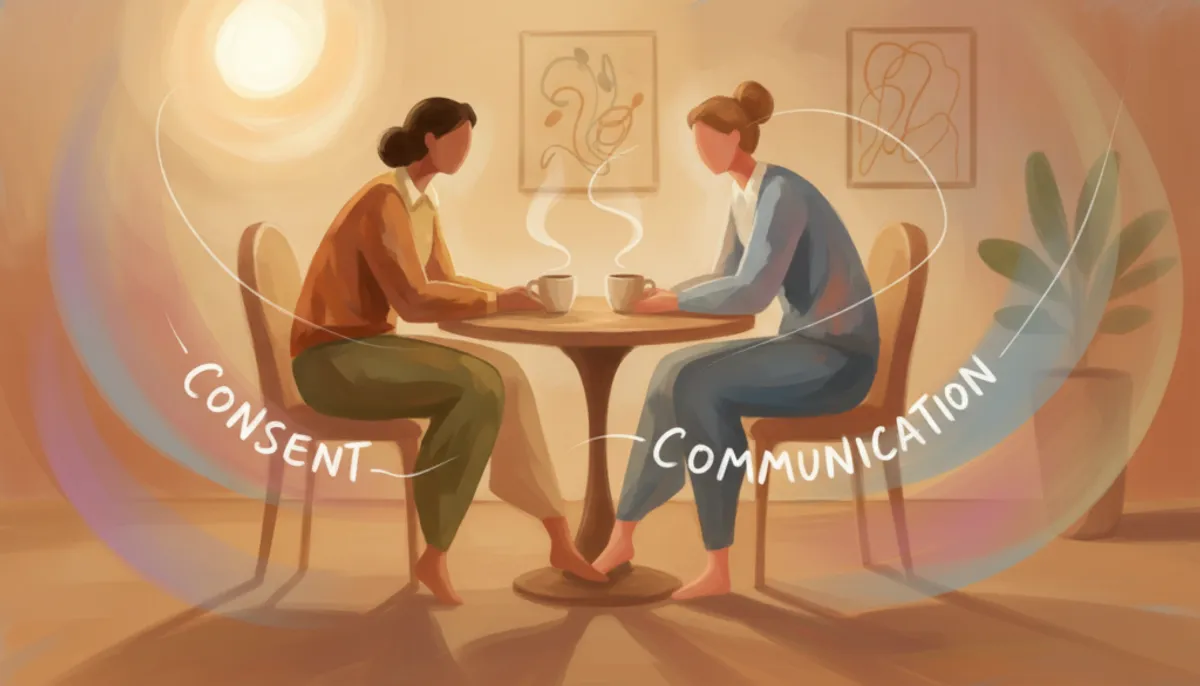
Consent must be clear and explicit. Both parties must communicate openly and ensure that everyone feels comfortable and agrees at all times.
What are the consequences of non-consent?
Non-consent can lead to criminal acts such as rape or sexual assault. Legal consequences may include criminal prosecution and severe penalties.
Can consent be withdrawn?
Yes, consent can be withdrawn at any time. If a person changes their mind, it is crucial to respect their decision immediately.
What are common myths about consent?
A common myth is that silence or lack of resistance equates to agreement. In reality, consent must be explicit and active, and silence cannot be interpreted as agreement.
How to approach the topic of consent in a relationship?
It is important to talk about it openly and honestly. Discussing expectations, boundaries, and preferences can help establish a solid foundation of mutual respect.